15 September 2026 | NEWS


New insights into light-matter interactions provide a deeper understanding of quantum materials
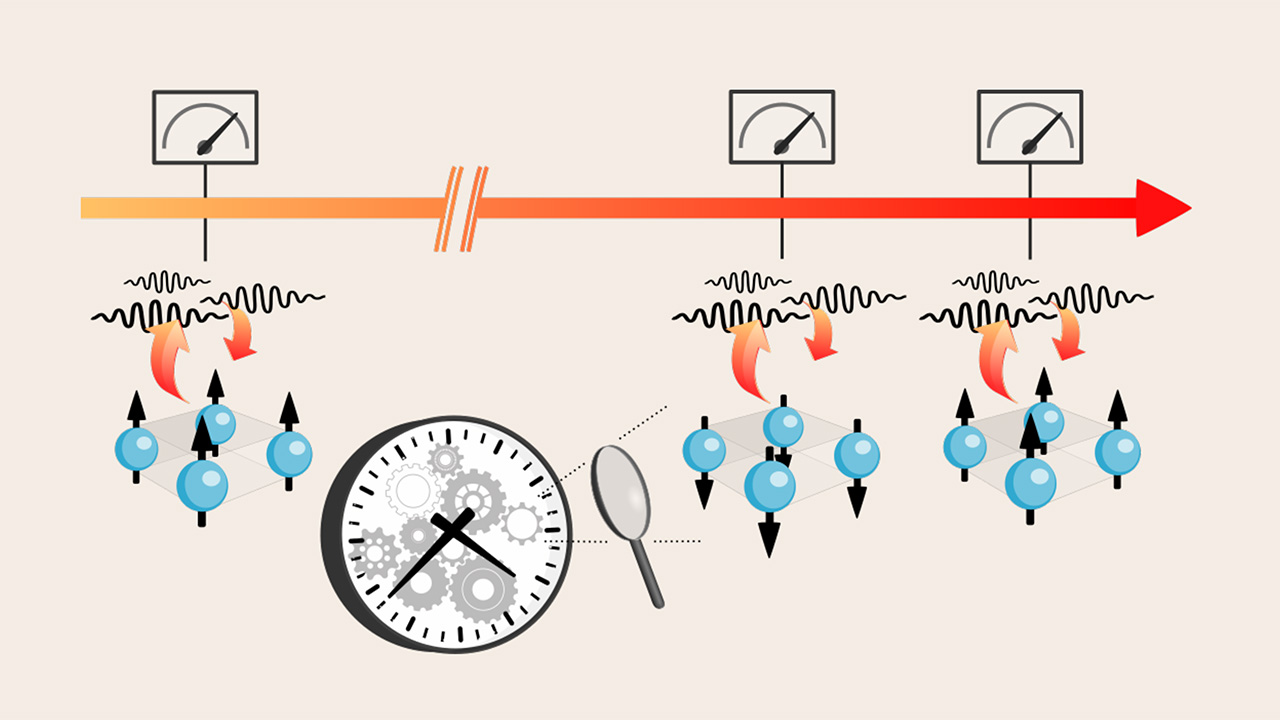
A collaboration led by ICTP has developed the first theoretical model of the fractional quantum Hall effect in a cavity. Published in Physical Review X, the study opens new avenues for understanding quantum matter by predicting new light-matter correlated states and lays a solid foundation for future theoretical and experimental investigations.
The fractional quantum Hall effect has been thoroughly studied over the years, and physicists have recently started confining these systems into cavities—tiny, controlled environments where light interacts strongly with matter—in search of new ways to better control these strange states of matter. A group of theoreticians, including researchers from ICTP, the International School of Advanced Studies (SISSA), the Italian National Research Council and Trento University, as well as the Indian Institute of Technology in Chennai, has developed a theoretical model that examines the behaviour of the fractional quantum Hall effect in such a cavity.