A research team from the CNR-Istituto Officina dei Materiali (IOM) has helped shed light on one of the most delicate and fundamental processes in cell biology: how cells process the genetic information encoded in RNA.
The study, published as a Breakthrough Article in the prestigious journal Nucleic Acids Research, was conducted by Pavlína Pokorná and Alessandra Magistrato of CNR-IOM in collaboration with the group of Vladimir Pena at The Institute of Cancer Research in London.
The research focuses on RNA splicing, the mechanism that allows cells to “cut and reassemble” genetic information before proteins are produced. When this process fails, numerous diseases can arise, including cancer and neurodegenerative disorders.
Using advanced computational simulations, the team was able to observe at the atomistic level how RNA molecules recognize each other with remarkable precision inside the cell and transfer genetic information before protein synthesis takes place.
In particular, the researchers uncovered a previously unknown molecular mechanism, described as a sort of “loaded spring”: a molecular structure stores energy through its interaction with specific proteins and releases it at the right moment to enable the correct recognition of messenger RNA genetic sequences.
“It was particularly exciting for us to connect structural data with atomistic simulations and characterize intermediate steps of the splicing recognition process that had remained invisible to structural biology techniques,” says Alessandra Magistrato, Research Director at CNR-IOM and affiliated with SISSA – International School for Advanced Studies. “The integration and synergy between structural biology data and advanced computer simulations allow us to understand with great accuracy how extremely complex and dynamic biological systems function.”
“For the first time, we were able to visualize the dynamic processes of splicing at this level of detail, and it was fascinating to observe these molecules in action,” adds Pavlína Pokorná, first author of the study. “Our modeling approach may serve as a guide for analogous studies on other cellular processes, helping us add further pieces to our understanding of gene expression.”
This discovery opens new perspectives for investigating the molecular mechanisms involved in many diseases, including several types of cancer.
The work was supported by the Italian Association for Cancer Research (AIRC) and by the CINECA supercomputing center through the ISCRA initiative.
More news

25 March 2026 | NEWS
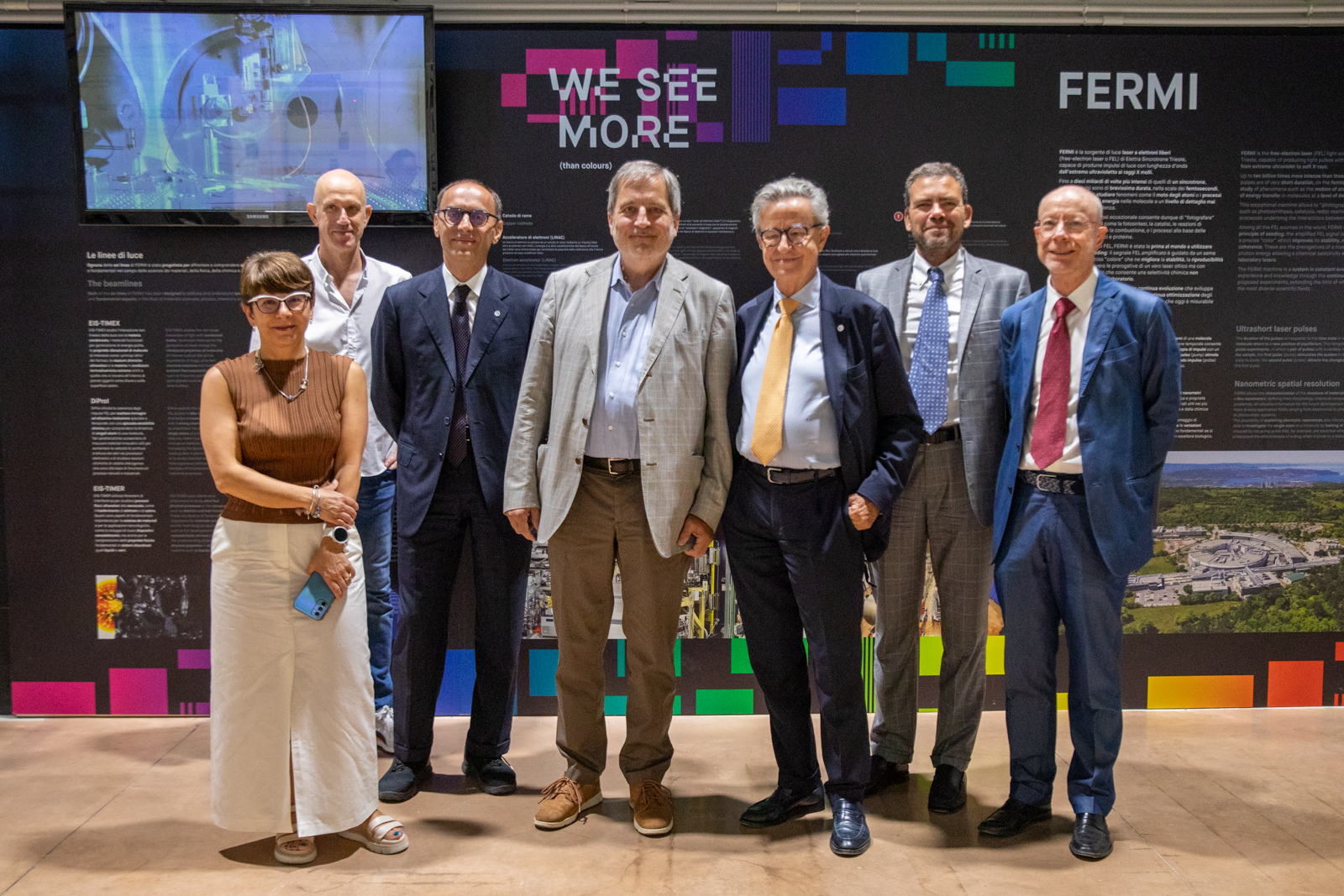
Rector of the University of Trieste Donata Vianelli visits CNR-IOM laboratories


23 September 2025 | NEWS
IOM Workshop 2025: fostering scientific exchange in Trieste