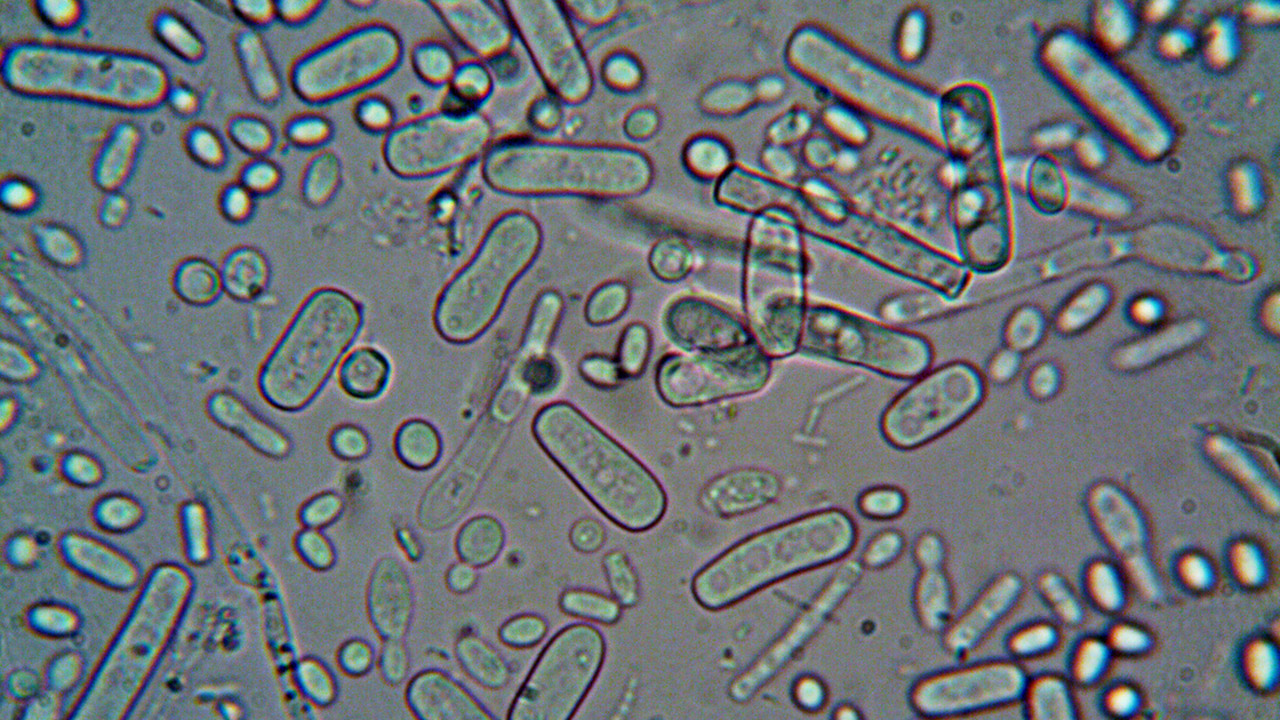
All organisms need to find ways to survive in changing environments, which at times can become hostile: extreme temperatures, food scarcity, low oxygen and high radiation can make life very difficult. While hibernation is prevalent among animals, several types of bacteria rely on their capacity to turn into spores—sturdy structures that survive extremely unfavorable conditions. Spores are among the most abundant cell types on Earth and they have existed for billions of years. Despite their protective role, however, spores come at an energetic cost for cells. Scientists are curious to understand how the economics of spore production has played a role in their evolution.
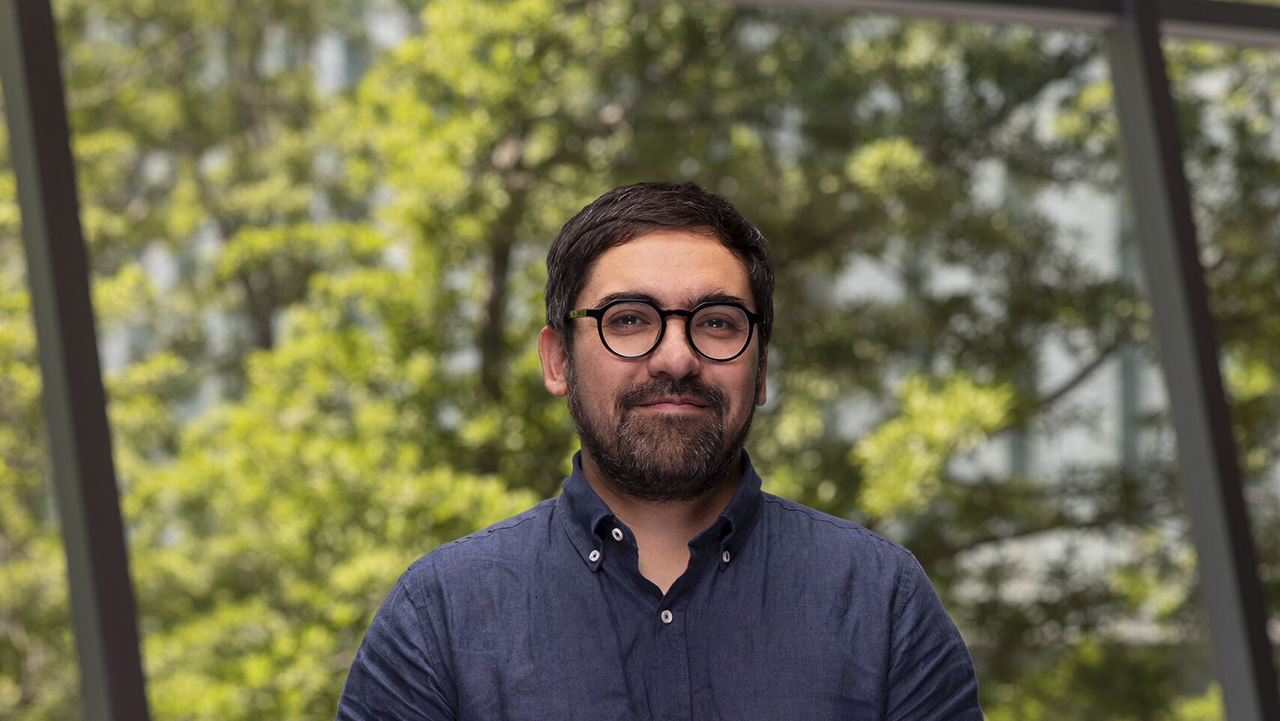
To answer this question, William Shoemaker, a postdoctoral researcher in ICTP’s Quantitative Life Sciences section, teamed up with researchers at Indiana University, in the United States, to study the energetics of spore formation in bacilli—a group of bacteria that scientists use as model organisms to understand how life survives in extreme environments. Their study shows that energetic factors can explain the behaviour of bacterial populations in unfavorable environments, and provides a possible explanation of why spore formation has survived for billions of years in certain strains and was lost in others. Their results reveal key forces at play in the evolution of this essential survival mechanism. The findings were recently published in the Proceedings of the National Academy of Sciences (PNAS).

More news
World First Master's Degree in Radiation Metrology
So you want to be a scientist? Career pathways for women from the Global South
ICTP Leading New Anti-Malaria Initiative
Launching Salam's Centennial Year
The ICTP SciFabLab Meets Kuwait
Machine Learning for Health Care in Palestine
Science is Our Common Language
Call for proposals, ICTP Scientific Calendar 2027
Artificial Intelligence for Afghan Students
Bright Imperfections?
ICTP researcher Erika Coppola receives the 2025 Motumundi Prize
ICTP’s Filippo Giorgi is among the world’s most influential researchers
ICTP Announces its 2026 Scientific Calendar
Eccellence in Medical Physics
Ramanujan Prize 2025 Announced
Public film screening at ICTP
ICTP announces a new, five-year strategic plan
Carolina Araujo, new holder of ICTP Ramanujan International Chair
How Bacteria Predict the Future
Fluorescence in Amino Acid Crystals
Michele Parrinello, a catalyst for discoveries
ICTP Welcomes Delegation from India
Two Diploma Students Share 2025 Shafi Prize
Assessing Climate Change
AI Sheds New Light on Earth’s Inner Core
2025 ICTP Dirac Medal Goes to Gravity Explorers
Eco-friendly Sunscreens with AI
First winner of the ICTP-IBM Brahmagupta AI Prize for Early Career Scientists
Find out more
ICTP and IBM Announce Plans for New Prize for Quantum Computing
Celebrating Quantum Science
Measuring the Elusive: Quantum Physics Rewrites the Metric System
Quantum Materials, Trapped
Find out more
Finding Energy in Hydrogen
ICTP Honors Euler and Lagrange in New Lecture Room
Connecting quantum computing to network theory
From ICTP Diploma to High Performance Computing
Celebrating Quantum Science
From Chemistry to Quantum Computing