Manganese is essential for life, but at high concentrations it can become a water pollutant associated with mining, mineral processing, and industrial activities. Removing it from contaminated water is challenging, particularly under acidic conditions. Yet these extreme environments are home to microscopic organisms that have evolved remarkable survival strategies. Understanding how they cope with such conditions could open up promising avenues for environmental and biotechnological research.
The study focuses on Chlamydomonas acidophila PM01, a green microalga isolated from an acid mine drainage pond. PM01 can tolerate manganese concentrations of up to 2.75 grams per litre of water, the highest concentration reported to date for a microalga. The researchers sought to understand not only how much manganese the organism could withstand, but also how it manages to do so without compromising its cellular machinery.
The microalga does not appear to survive by accumulating the metal inside its cells. Instead, it largely prevents manganese from entering the cytoplasm, either binding it to the cell surface or sequestering it within vacuoles, cellular compartments that act as protective storage sites. This strategy may be less dramatic than that of a biological “sponge”, but it is remarkably effective.
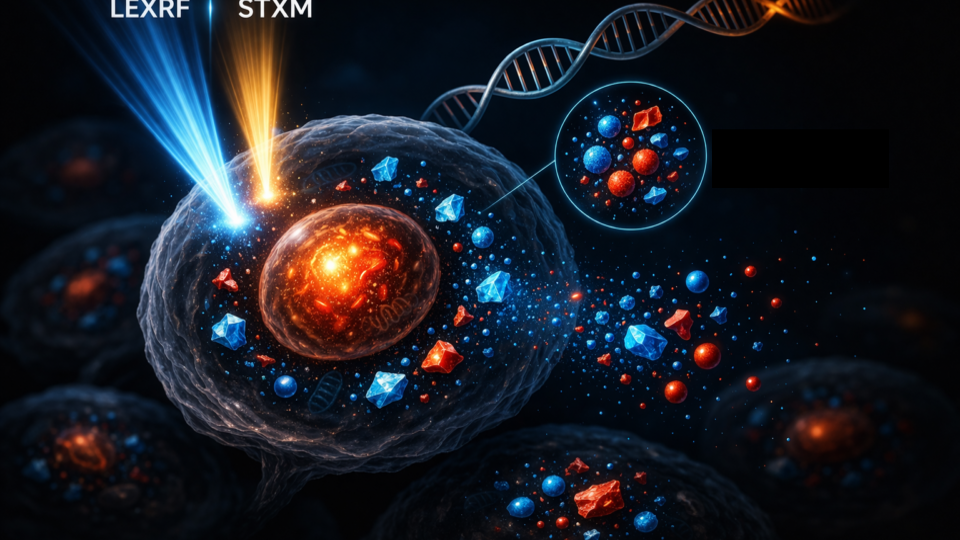
To unravel this mechanism, the research team combined the capabilities of three Elettra beamlines. TwinMic mapped elemental distributions and intracellular structures; the XRF beamline provided insights into the chemical state of manganese; and SISSI-Bio revealed changes in the cellular biochemical response. The measurements show that this remarkable tolerance comes at a cost: the cells redistribute their metabolic reserves, reorganize their vacuolar system, and exhibit signs of mild oxidative stress. Survival, in other words, is an active and demanding process.
More news