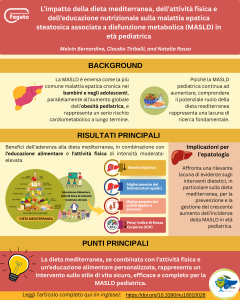
A recent scientific review published in the special issue of the journal *Nutrients* dedicated to the topic “Diet and Lifestyle Tips: What Helps Prevent or Reverse MASLD?” examines the role of the Mediterranean diet, physical activity, and nutrition education in the prevention and treatment of Metabolic Dysfunction–Associated Steatotic Liver Disease (MASLD) in the pediatric population, a condition that is steadily increasing worldwide.
MASLD currently represents the most common form of chronic liver disease in children and adolescents and is closely associated with obesity, insulin resistance, and increased cardiometabolic risk. According to the World Health Organization (WHO), the global prevalence of obesity among children and adolescents aged 5–19 years increased from 1.9% in 1990 to 8.2% in 2022, affecting more than 160 million young people.
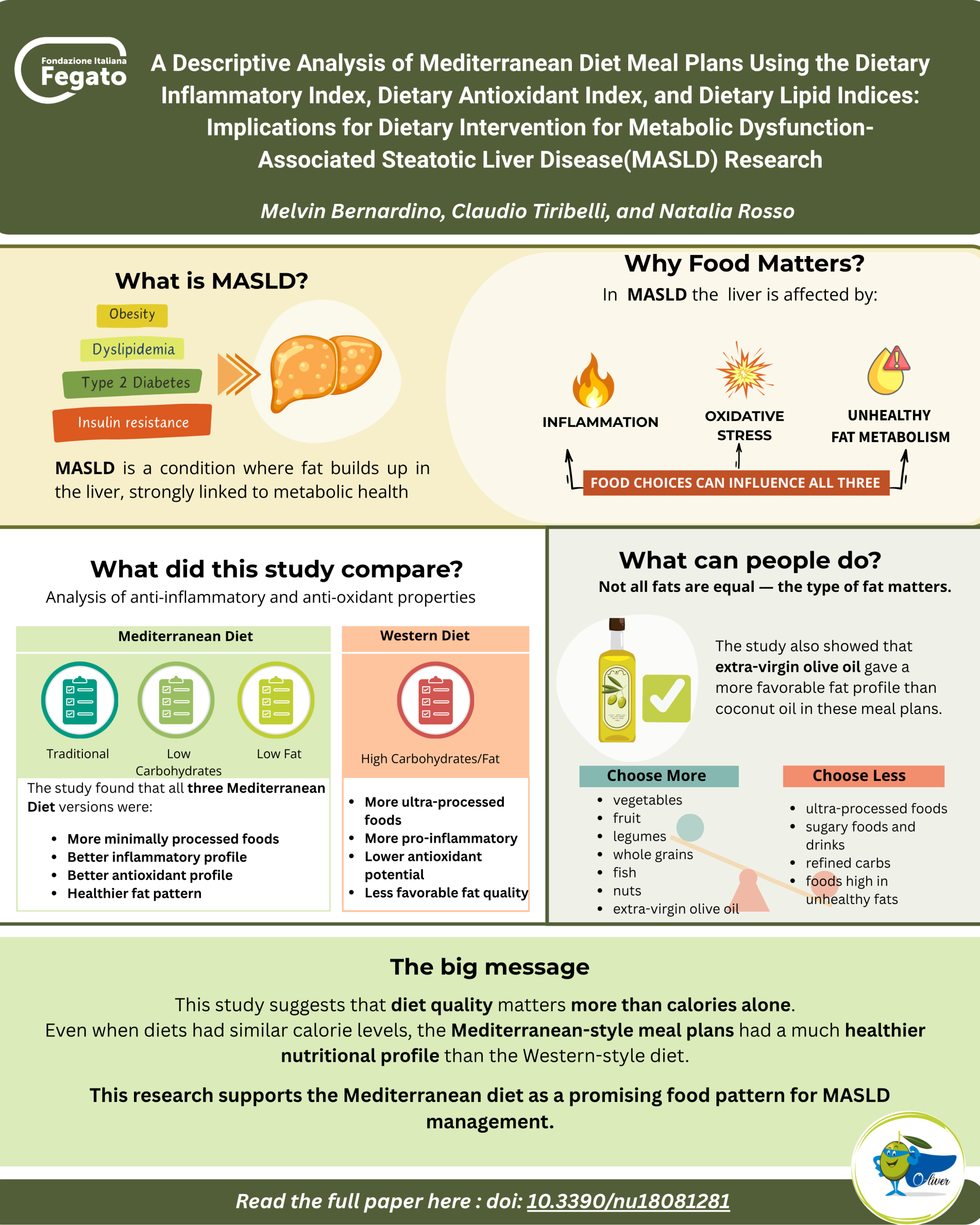
The review, authored by Melvin Bernardino, Claudio Tiribelli, and Natalia Rosso of the Italian Liver Foundation, examines the available evidence from eight clinical studies conducted in pediatric populations, assessing the impact of the Mediterranean diet and clearly explaining how it can act on the main mechanisms underlying the disease.
“The results highlight that adherence to the Mediterranean diet—characterized by a high intake of fruits, vegetables, legumes, whole grains, and monounsaturated fats (such as extra virgin olive oil), and well known for its positive effects on health due to its anti-inflammatory and antioxidant properties,” explains Melvin Bernardino, “together with a reduced intake of ultra-processed foods, is associated with a significant reduction in hepatic steatosis, liver stiffness (hepatic fibrosis), and inflammatory markers. The integration of structured physical activity programs further contributes to improvements in the metabolic profile.”
“Lifestyle-based interventions,” Bernardino continues, emphasizing the key role played by nutrition education—especially when it involves the entire family, promoting greater long-term adherence and more sustainable outcomes—“currently represent a safe and effective approach for the management of pediatric MASLD. However, the review highlights the need for larger, longer-term clinical studies with standardized protocols in order to define shared clinical recommendations.”
The study is part of the O-liver project of the Italian Liver Foundation, which aims to specifically investigate the health benefits of extra virgin olive oil (EVOO). The project is carried out in collaboration with ANCO – the National Association of Olive Oil Cities – and with the support of COOP Alleanza 3.0.
More news